10 Things to Do in Budapest: Notes From My Hungarian Days
Buda Castle at a slow pace, a heavy afternoon at the House of Terror, Christmas lights by the Basilica and a night train from Berlin: my favourite things to do in Budapest.
Looking for things to do in Budapest beyond the usual top-ten lists? I lived in Hungary as a student, spending my days between Budapest and the eastern city of Nyíregyháza. Over those months I collected small stories in my notes: walks, museums, markets and long train rides. Most of them became my personal list of things to do in Budapest.
This Budapest travel guide brings them together as 10 experiences I keep recommending to friends, with the practical details I wish I had known before I went.
This article contains affiliate links. If you book or buy through them, I may earn a small commission at no extra cost to you. Read the full disclosure.
Table of Contents
Budapest at a glance: Buda and Pest
Budapest is really two cities joined by the Danube. Buda, on the west bank, is hilly, green and historic, crowned by the Castle District. Pest, on the flat east bank, is the busy heart of the city, with grand boulevards, cafés, ruin bars, the Parliament and most of the shops. I spent most of my time in Pest, so crossing the river always felt like a small trip of its own.
10 best things to do in Budapest
Photo: Ank Kumar / Wikimedia Commons, CC BY-SA 4.0
1. Walk up to Buda Castle and the Royal Palace
Start at Buda Castle, home of the Royal Palace. The whole hilltop is a complex of historic buildings and one of the city’s busiest sights. Its story is a history of battles: the first fortress was built on the orders of King Béla IV in the 13th century to defend against the Mongol invasions, then expanded by later kings, captured by the Ottomans, retaken, and badly damaged again in the Second World War.
Today the palace houses the Hungarian National Gallery, the National Széchényi Library and the Budapest History Museum. Walking on, you pass the Habsburg Gate, the fountains and, further along, the Vienna Gate.
Tip: walk up for the views, or take the historic funicular from Clark Ádám Square if you want to save energy.
See it with a guide
Buda Castle guided walking tour with royal cake tasting
Walk the Castle District with a guide who brings its battles, kings and legends to life, finishing with a taste of a classic Hungarian cake.
From the palace, wander through the streets of the Castle District. This side of the city feels calmer and more historic: colourful houses no more than two storeys high, small specialist museums (music, medicine) and even an underground labyrinth, which I have saved for next time. It is one of the most peaceful things to do in Budapest, especially early in the morning.
3. Watch the view from Fishermen’s Bastion
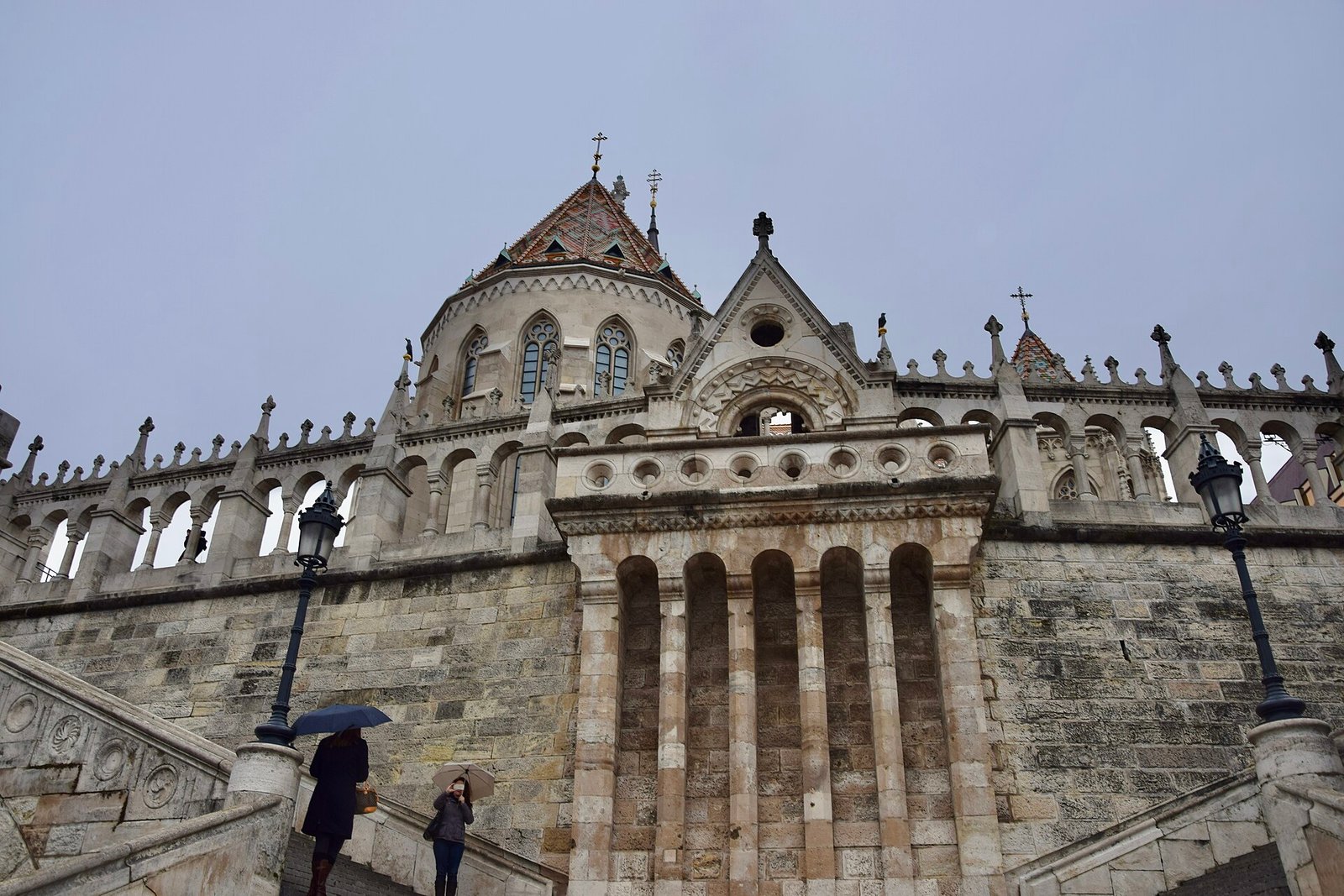
Without walking far, you reach Fishermen’s Bastion, a fairy-tale terrace of white towers next to Matthias Church. From its terraces and from the castle walls, a panorama opens over the Danube and the whole of Pest, with Parliament right across the water.
Tip: go early in the morning or late in the afternoon for softer light and smaller crowds.
Photo: Csurla / Wikimedia Commons, CC BY-SA 2.5
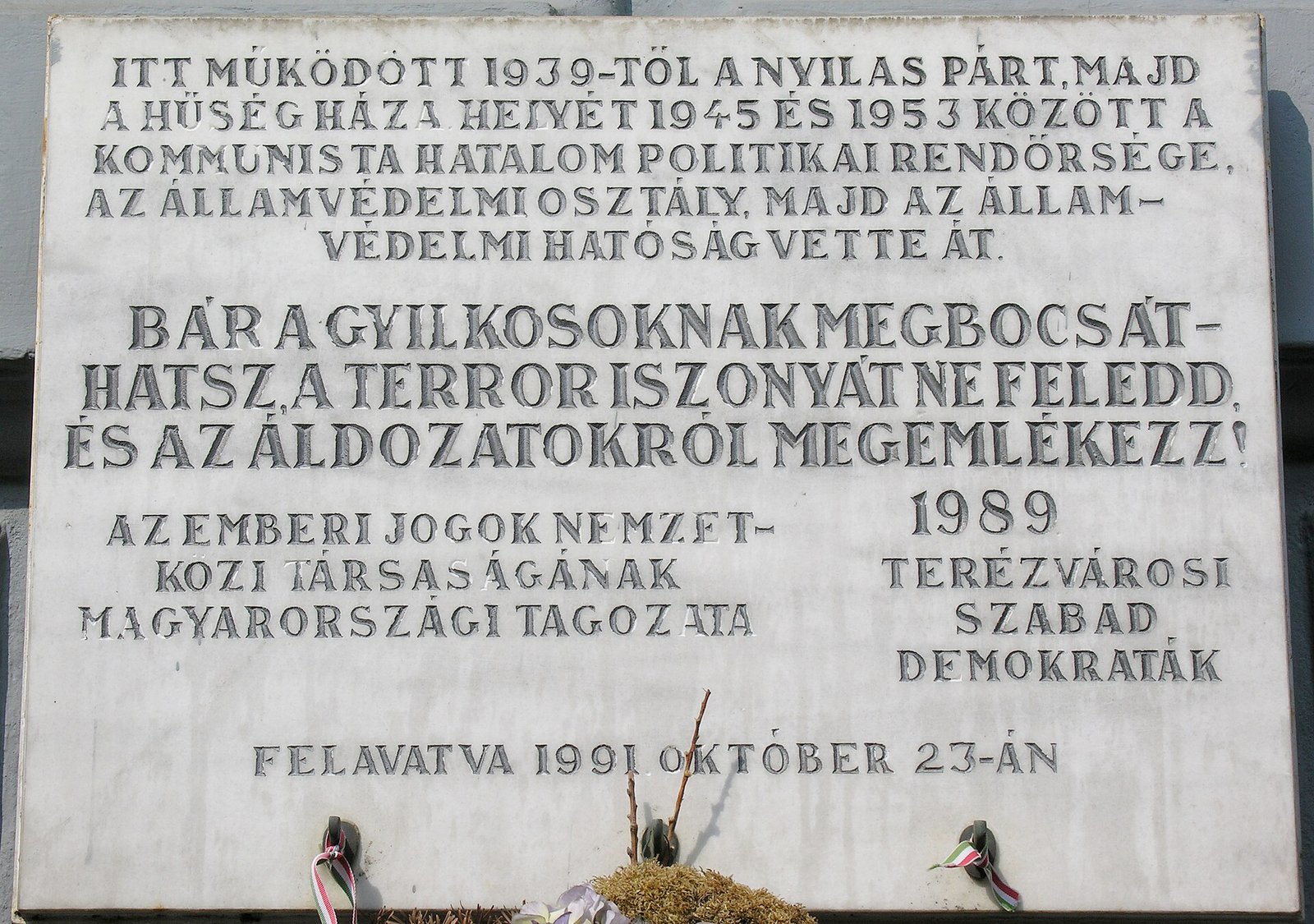
4. Visit the House of Terror Budapest museum
I visited the House of Terror on 23 October, a national holiday that commemorates the 1956 revolution, when entry was free. I had been putting the visit off, but the date felt right. The queue was long but moved quickly.
The museum, at Andrássy Avenue 60, tells the story of Hungary’s 20th century, focusing on the fascist and communist dictatorships and especially the decades after 1945. It occupies the real building once used by the secret police, the ÁVO and later the ÁVH, Hungary’s equivalent of the Soviet KGB.
The rooms recreate the atmosphere of the era with real artefacts, clothing, telephones playing recorded voices, video interviews, courtroom scenes and, at times, unsettling music. Walls of photographs show both the officials who led the cases and the people who became their victims. The basement holds reconstructed prison cells.
Before you go to the House of Terror Budapest:
Language: most labels are in Hungarian, but each room has printed sheets in English. A translation app helps too.
No photos: photography is not allowed inside, and the attendants watch closely.
Time: plan at least two hours; I stayed for more than that.
Context: read a little Hungarian history beforehand. The exhibition is dense, and knowing the background makes it far more meaningful.
It is a heavy visit, and my impression was mixed: emotionally hard, overwhelming in places, but important. There are several museums like it across Eastern Europe; this was the first I had seen.
Understand the context
House of Terror guided tour
A guide helps you make sense of the dense exhibition and the history behind it, which is exactly what I missed when I visited on my own.
While you are there, add one of the easiest free things to do in Budapest: walk the length of Andrássy Avenue, Budapest’s grandest boulevard, lined with mansions, embassies and the State Opera House. It runs from the city centre all the way to Heroes’ Square and City Park, and continental Europe’s oldest underground line runs beneath it.
Photo: Karl Gruber / Wikimedia Commons, CC BY-SA 3.0 at
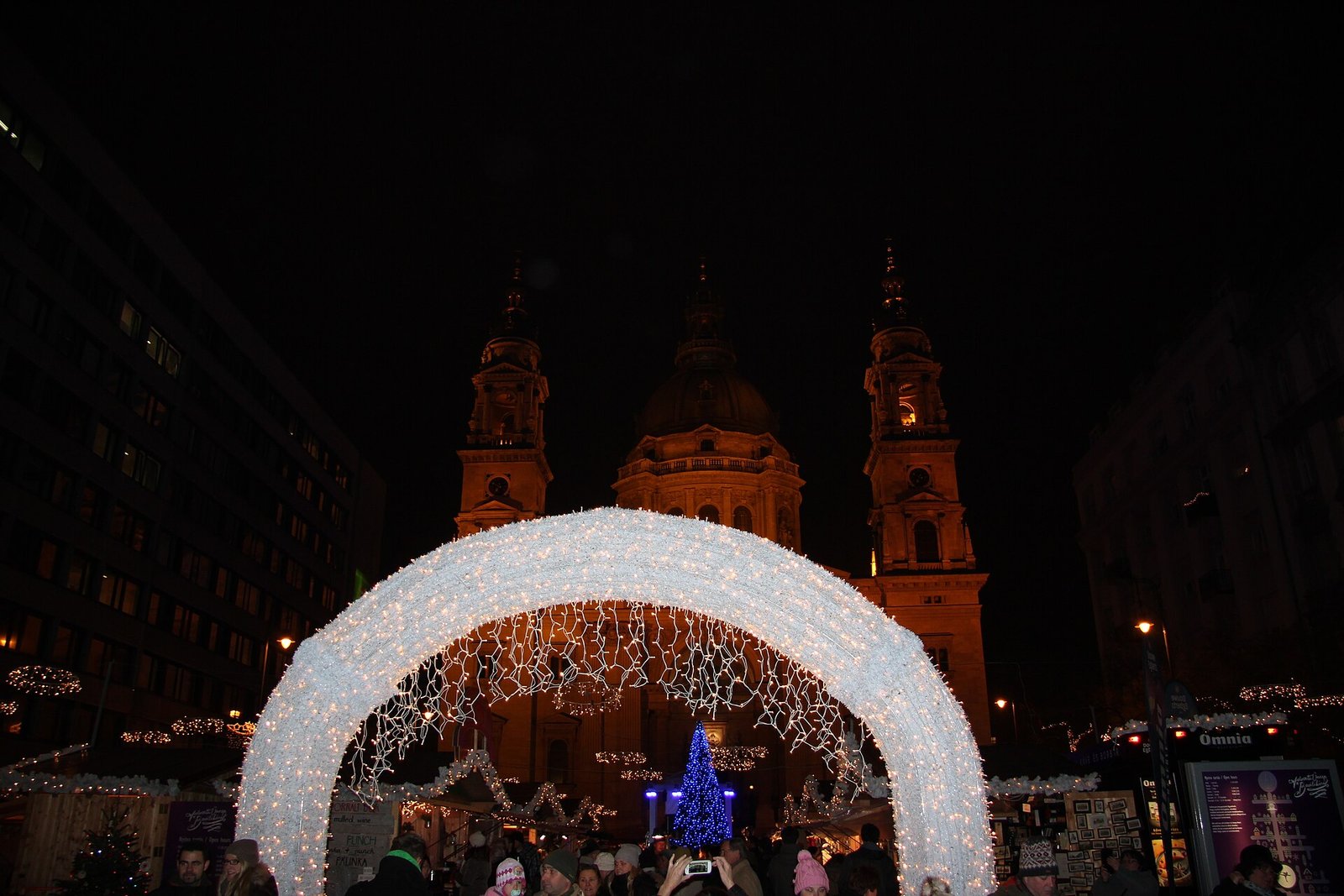
6. Feel the magic of the Christmas market at St Stephen’s Basilica
If you visit in December, go to the Christmas market in front of St Stephen’s Basilica. It is busy but lovely: the facade lit up, stalls of food and gifts, and the smell of mulled wine. Of all the things to do in Budapest in winter, this is the one I would not miss.
7. Walk Fashion Street under the lights
From the Basilica, I walked with a hot chocolate onto Fashion Street (Deák Ferenc utca), strung with bright garlands, glittering hanging shoes and decorations. I photographed and filmed everything I could. For festive atmosphere, this is the place.
Photo: Dd-ang2s / Wikimedia Commons, Public domain
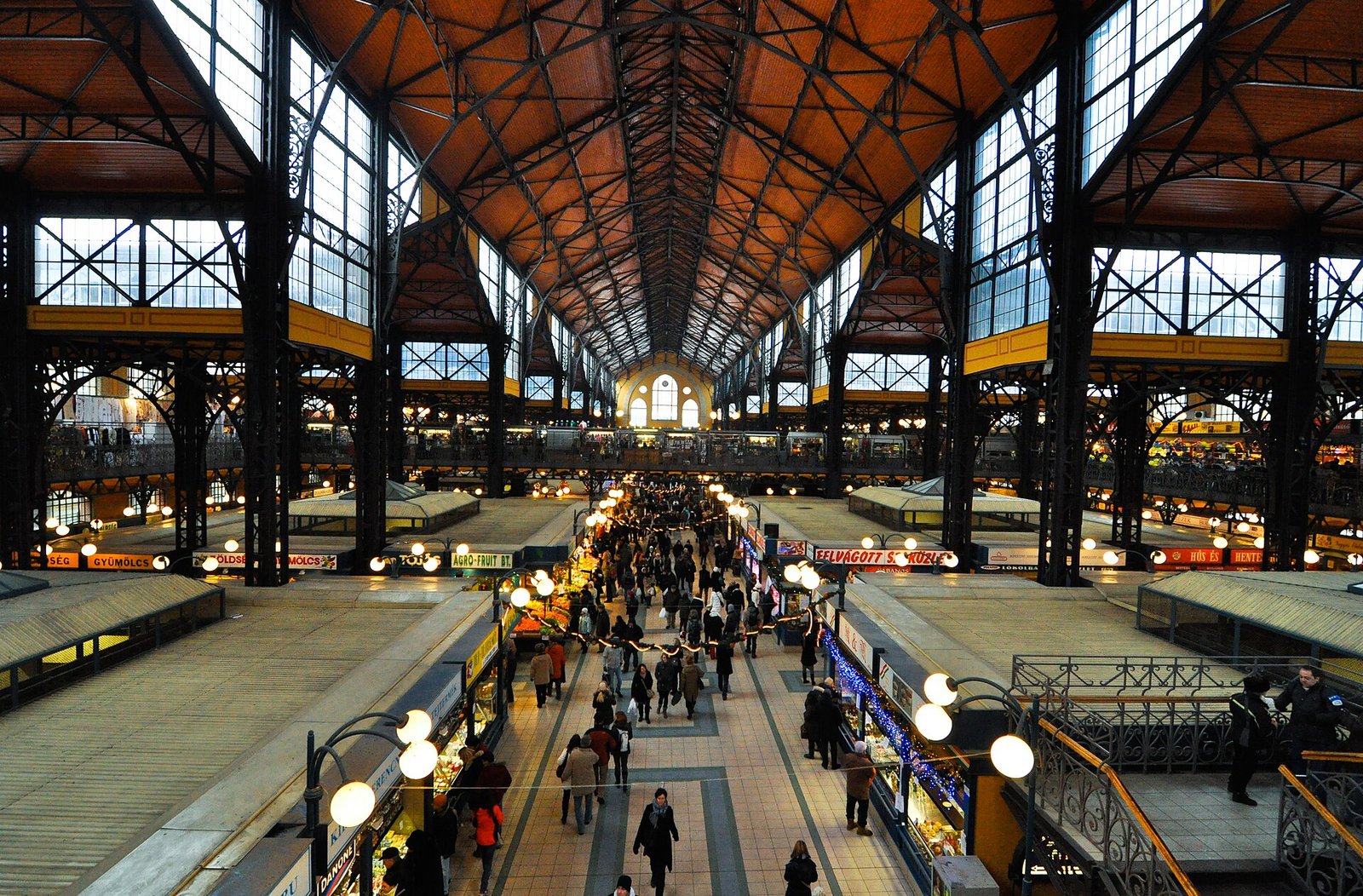
8. Shop for food and souvenirs at the Central Market Hall
The Central Market Hall is a huge covered market and a good place to shop before a trip home. Prices are much lower than elsewhere in the centre, which makes it one of the most practical things to do in Budapest before you fly home.
Ground floor: paprika, salami, pastries, fresh produce and wine
Upper floor: souvenirs, embroidery and food stalls serving lángos
Prices: I bought three magnets for 1,200 forints
Payment: I paid by card, but carry some cash, as not every stall accepts cards for small amounts
9. Find handmade Hungarian souvenirs
Near the Basilica I wandered into a bright, cheerful shop and got talking to the shop assistant. She told me everything there was made in Hungary. What caught my eye were the labels on the handmade clothes: each one had a photo of the person who made it, their handwritten name and signature, the town where it was made and a short story. Simple, but it makes you stop and look.
Everywhere in the city you will also see little tin soldiers, which turn out to be Hungarian hussars, the famous light cavalry, rather than nutcrackers. And as a lover of notebooks, I could not resist the beautiful stationery.
10. Travel by train, and try a night train
I travelled around Hungary mostly by train, and I paid attention to comfort and infrastructure. What I noticed:
Punctuality: trains are almost always on time.
Easy tickets: buy from a cashier, a machine, the website or the MÁV app. I used the app; it stores student discounts and details, and it was cheaper. Once, I even forgot to buy a ticket and did it on the train.
Clear information: every station has screens with live schedules.
Kind staff: conductors greet every passenger with jó napot kívánok (good day) and köszönöm (thank you).
Coming back from Berlin, I took the night train straight to Budapest, so I could change directly to the train for Nyíregyháza. I had booked a single compartment, but when I boarded I found a six-berth cabin with two pillows and two towels, and for a moment I felt anxious: would I really be alone? A kind, grey-haired conductor soon realised the compartment was mine, showed me how to lock the door and offered coffee.
The internet disappeared, the window turned black, and I had the whole compartment to myself. I sang a little, listened to music, worked on my laptop and simply enjoyed my own company. Train. Compartment. Night. And me. It was one of the calmest nights of my travels.
Don’t miss
Hungarian Parliament tour with audio guide
Go inside one of Europe’s most beautiful parliament buildings, with the option to add a Danube boat tour.
Currency: Hungary uses the forint (HUF). Cards are widely accepted, but keep some cash for markets and small purchases.
Getting around: trams, metro and buses cover the city; tram lines 2, 4 and 6 are scenic and useful.
Language: Hungarian is unlike its neighbours’ languages. Learn jó napot (good day) and köszönöm (thank you); people appreciate it.
When to go: spring and autumn are pleasant for walking; December brings the Christmas markets.
Free museum days: some museums offer free entry on national holidays, as I found on 23 October.
Final thoughts on things to do in Budapest
Budapest rewards slow travel: an early walk on Castle Hill, an afternoon that makes you think, an evening under Christmas lights. Use these things to do in Budapest as a starting point, then let the city surprise you.